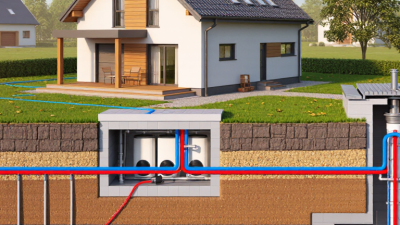
7 Geothermal Heating Tips for Global Buyers
Choosing geothermal heating is not simply a matter of buying equipment. It is a long-term decision involving land, climate, installation quality, and household demand. Global buyers must examine ground conditions, local temperatures, drilling access, electricity prices, and available service networks. A system that performs well in Sweden may require different design choices in Australia or Brazil. Details matter.
Dr. John W. Lund, a widely cited geothermal researcher, once observed, “The use of geothermal energy is limited only by our imagination.” His words remain relevant, but imagination needs measurement. Buyers should request verified efficiency data, seasonal performance estimates, warranty terms, and references from comparable installations. A quiet heat pump is useful. A poorly sized ground loop is not.
This guide presents seven practical geothermal heating tips for international purchasers. It considers ground-source and water-source systems, installer qualifications, maintenance access, operating costs, and lifecycle value. It also explains why the lowest quotation can become expensive after excavation, permitting, or repairs. Some recommendations may feel obvious. They are still frequently missed.
Real projects are rarely perfect. Soil reports can be incomplete, budgets can shift, and local expertise may be limited. Buyers should question optimistic payback claims and compare several professional assessments. Reliable decisions come from evidence, not promises. With careful planning, geothermal heating can provide steady indoor comfort, reduced fossil-fuel dependence, and durable performance across many climates.
Understanding How Geothermal Heating Systems Work
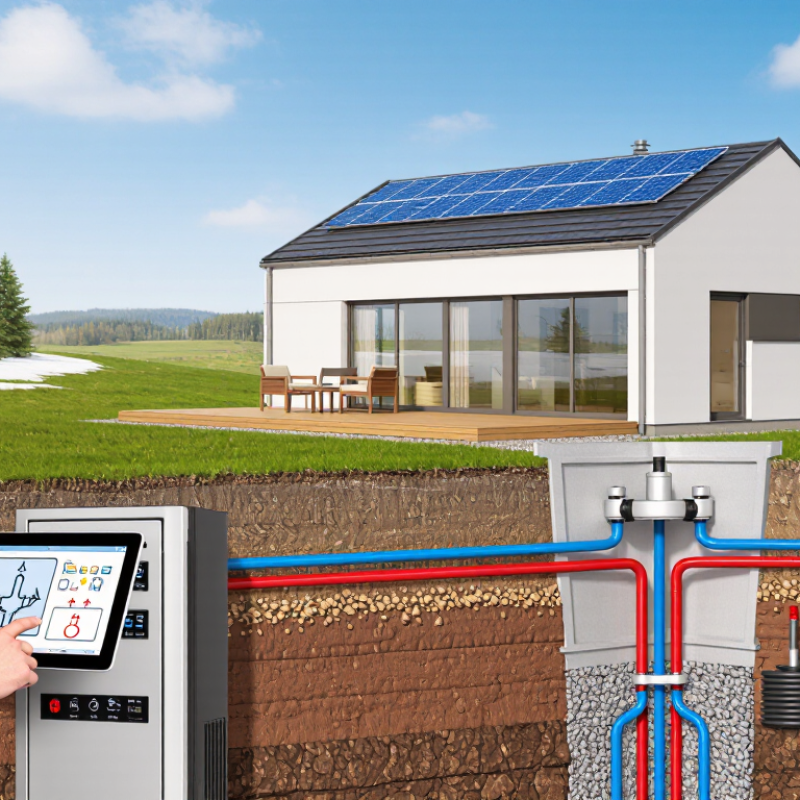
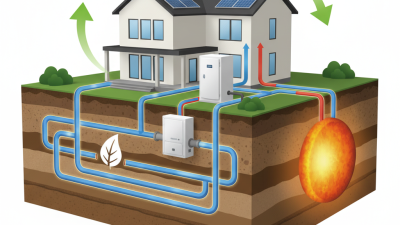
Geothermal heating systems move heat rather than create it. A ground loop circulates water or antifreeze through buried pipes, where soil temperatures remain relatively stable. The fluid returns to a heat pump, which extracts this low-temperature heat and raises it for indoor use. In summer, the process reverses and transfers indoor heat back into the ground.
Global buyers should check seven practical details. Confirm the system matches local soil conditions, available land, drilling rules, and winter temperatures. Compare horizontal loops with vertical boreholes before choosing an installation method. Ask for seasonal efficiency data, not only the highest rated figure. A properly sized heat pump usually runs longer and more steadily. Oversizing can cause short cycling. That matters.
The distribution system also affects comfort. Underfloor heating works well because it uses lower water temperatures, while older radiators may need upgrades. Request a heat-loss calculation for the building, including windows, insulation, and ventilation. Check whether local technicians can test loop pressure and refrigerant circuits. Maintenance is usually limited, but neglected filters can reduce airflow and efficiency. One point deserves honesty: geothermal heating is not automatically cheaper everywhere. Electricity prices, drilling costs, property size, and climate can change the result significantly. Get a site assessment before trusting a simple payback estimate.
Assessing Site Conditions and Choosing the Right System
7 Geothermal Heating Tips for Global Buyers
Tip 1: Check the ground before comparing equipment. A professional survey should record soil layers, groundwater movement, rock depth, and available land. The International Energy Agency reports that heat pumps can deliver three to five units of heat for each unit of electricity. That performance depends heavily on site conditions.
Tip 2: Match the loop to the property. Horizontal loops need open land and suitable trenching depth. Vertical boreholes suit compact sites, but drilling costs can rise sharply in hard rock. Tip 3: Measure winter demand, not just floor area. Insulation, window quality, occupancy, and local design temperatures change the required capacity. Oversized systems may cycle inefficiently.
Tip 4: Compare ground-source, water-source, and hybrid options. Water chemistry can affect heat exchangers. Poor groundwater quality may require extra filtration or a closed-loop design. Tip 5: Confirm local permits, drilling rules, and water protection requirements. These differ widely between countries. The U.S. Department of Energy notes that geothermal systems can reach efficiencies of 300% to 600%, but installation quality remains decisive.
Tip 6: Request thermal response testing for larger projects. It can improve borehole sizing and reduce expensive guesswork. Tip 7: Review maintenance access and backup heating. A perfect forecast is impossible. My own practical caution is simple: preliminary sizing can be wrong when soil data is weak. Ask for measured assumptions, seasonal performance estimates, and transparent lifecycle costs before choosing a system.
Comparing Ground-Source Heat Pump Types and Installation Options
7 Geothermal Heating Tips for Global Buyers
Ground-source heat pumps differ mainly by loop design and heat delivery. Horizontal closed loops suit properties with open land and moderate excavation costs. Trenches usually run one to two metres deep, depending on local soil and climate.
Vertical closed loops need less surface area. Drilling costs more, but this option fits compact urban sites. An open-loop system uses groundwater directly, so water quality and discharge rules require careful assessment. Pond loops can work near suitable water, although seasonal temperature changes deserve attention.
Inside the building, buyers can choose ducted air systems or hydronic floor heating. Hydronic systems provide quiet, even warmth, but they may need larger radiators or underfloor pipes.
Existing ductwork can reduce disruption, yet its insulation and airflow should be tested first. Small details matter.
A reliable installer should complete ground surveys, heat-loss calculations, and seasonal performance estimates. Ask for pipe depth, antifreeze type, drilling records, maintenance access, and noise measurements. Local permits also vary widely. Never compare equipment prices alone.
I would avoid assuming the most expensive installation is best. A poorly sized system can cycle often and waste energy. My own planning would include a realistic soil report and a slightly conservative heating load. Perfect forecasts do not exist. A transparent design usually performs better than a rushed promise.
Evaluating Costs, Energy Savings, Maintenance, and Lifespan
7 Geothermal Heating Tips for Global Buyers
Evaluate the full cost, not only the equipment invoice. A geothermal system usually needs drilling, excavation, water testing, permits, and indoor installation. The U.S. Department of Energy reports that geothermal heat pumps can reduce heating and cooling energy use by about 25% to 50%. However, savings depend on soil conditions, electricity prices, building insulation, and system design. A cheap proposal may hide expensive ground work.
Check the expected energy savings with measured data. The U.S. Environmental Protection Agency states that certified geothermal systems can use up to 70% less energy for heating and 50% less for cooling than conventional systems. Ask suppliers for seasonal performance figures, not laboratory claims. Tip one: compare seasonal efficiency. Tip two: request a heat-load calculation. Tip three: examine local utility rates. Tip four: include pumps and backup heating in the energy estimate. Small details matter.
Maintenance is usually limited to filter replacement, airflow checks, and professional inspections. Still, neglected water quality can damage heat exchangers. The Department of Energy indicates that indoor components may last about 20 to 25 years, while properly installed ground loops can last 50 years or longer. Tip five: verify loop materials. Tip six: require service access. Tip seven: obtain a written maintenance schedule. I would not promise identical savings across countries. Installation quality remains the uncomfortable variable. A long lifespan is valuable, but only when technicians can diagnose the system years later.
7 Geothermal Heating Tips for Global Buyers - Evaluating Costs, Energy Savings, Maintenance, and Lifespan
| Buying Tip | What to Evaluate | Typical Benchmark | Cost Impact | Potential Energy Benefit | Maintenance and Lifespan | Best-Practice Check |
|---|---|---|---|---|---|---|
| 1. Compare loop configurations | Choose between horizontal, vertical, and water-source ground loops according to land availability, drilling conditions, geology, and local permits. | Horizontal loops commonly require about 1,000–3,000 square feet of ground-loop area per refrigeration ton, while vertical systems use much less surface area. | Vertical drilling can increase installation cost by approximately 20%–50% compared with a suitable horizontal layout, but may be the only practical option on small sites. | Both properly designed configurations can provide similar seasonal efficiency; the main difference is installation feasibility and ground conditions. | Buried polyethylene loop piping is commonly designed for 50 years or more; the indoor heat-pump unit generally lasts about 20–25 years. | Request a site survey, loop-length calculation, drilling quotation, groundwater assessment, and confirmation of permitting requirements. |
| 2. Size the system from the building load | Base capacity on a room-by-room heat-loss and cooling-load calculation rather than floor area alone. | Residential systems are often sized around 1 refrigeration ton per 400–800 square feet, but insulation, climate, windows, and design temperature can change this substantially. | Oversizing raises equipment and loop costs and can cause short cycling; undersizing may require expensive backup heating and reduce comfort. | Correct sizing helps the system operate for longer cycles and can support seasonal coefficient of performance values of roughly 3.0–5.0. | Correctly sized equipment usually experiences less cycling stress and more stable compressor operation. | Require a documented load calculation using local outdoor design temperatures and the building’s actual insulation and ventilation conditions. |
| 3. Check efficiency using seasonal metrics | Compare heating COP, cooling EER or SEER where applicable, and seasonal performance rather than relying only on a peak rating. | Ground-source heat pumps commonly achieve a heating COP of about 3.0–5.0 under rated conditions, meaning 3–5 units of heat for each unit of electricity. | Higher-efficiency models may cost more initially but can reduce electricity consumption over the operating life. | Compared with electric resistance heating, energy use can commonly fall by about 50%–70%; savings versus gas or oil vary with fuel prices and system efficiency. | Efficiency declines if filters, airflow, antifreeze concentration, or water flow are neglected. | Ask for test conditions, seasonal data, minimum operating temperature, auxiliary-heater controls, and a warranty covering both equipment and labor where available. |
| 4. Calculate total installed cost | Include the heat pump, ground loop, excavation or drilling, distribution system, electrical work, controls, permits, commissioning, and site restoration. | For a typical small-to-medium residential project, broad international installed-cost estimates often fall around US$15,000–US$45,000 before local incentives. | Ground-loop work can represent roughly 30%–60% of total project cost, with drilling, rock, restricted access, and difficult soil increasing the price. | Annual operating savings depend on climate, building demand, electricity prices, and the heating system being replaced. | Low-quality installation can reduce efficiency and shorten component life even when the equipment itself is well rated. | Compare at least three itemized quotations and separate equipment, loop field, labor, civil works, taxes, permits, and after-sales service. |
| 5. Evaluate savings and payback locally | Model annual energy use with local electricity, gas, oil, or district-heating tariffs and realistic seasonal demand. | Simple payback is often approximately 5–15 years, but it can be shorter with high heating demand, expensive fossil fuels, or financial incentives. | Incentives, rebates, low-interest finance, and avoided boiler replacement costs can materially reduce the effective payback period. | Heating-related energy savings may be around 30%–60% compared with conventional fossil-fuel systems and substantially higher compared with direct electric resistance heating. | Use a whole-life calculation covering at least 20 years, including electricity-price changes, service, and eventual heat-pump replacement. | Calculate annual kWh, annual cost, carbon intensity, incentive eligibility, and sensitivity to energy-price changes before purchasing. |
| 6. Plan maintenance and water quality | Review filter access, airflow, condensate drainage, antifreeze protection, circulating pumps, controls, and water chemistry for open-loop systems. | Routine service is commonly required once a year or every two years; typical residential maintenance may cost about US$150–US$500 per visit, excluding major repairs. | Regular maintenance helps prevent airflow restrictions, pump failures, freezing risks, and loss of seasonal efficiency. | Dirty filters, blocked heat exchangers, and incorrect flow rates can noticeably increase electricity consumption and reduce delivered capacity. | Indoor heat-pump equipment commonly lasts about 20–25 years; loop pumps and controls may require earlier replacement. | Confirm local technician availability, spare-parts lead times, service procedures, water-testing requirements, and emergency support. |
| 7. Verify installation quality and expected lifespan | Inspect loop pressure testing, pipe fusion records, trench or borehole documentation, insulation, commissioning data, and system controls. | A well-designed closed-loop field may last 50 years or longer, while the indoor compressor and heat-exchanger assembly commonly last about 20–25 years. | Higher-quality commissioning may increase upfront labor cost but reduces the risk of low output, repeated repairs, and premature replacement. | Stable ground temperatures allow reliable seasonal performance, but actual savings depend on design, climate, distribution temperature, and user settings. | Plan for one indoor heat-pump replacement during the life of a properly installed ground loop. | Obtain as-built drawings, pressure-test results, commissioning readings, warranty terms, performance guarantees, and a written replacement plan. |
| Data note: Costs, savings, payback periods, efficiency, and service intervals are planning ranges expressed in 2026 US dollars where monetary values are shown. Actual results vary by country, climate, building efficiency, soil conditions, system design, energy tariffs, labor rates, incentives, and installation quality. A qualified local designer should verify all project-specific figures. | ||||||
Checking Safety Standards, Climate Fit, and Supplier Reliability
7 Geothermal Heating Tips for Global Buyers
When evaluating a geothermal heating system, check safety standards before comparing prices. Ask for test reports covering electrical protection, pressure limits, fire resistance, and refrigerant handling. Documentation should match the destination market, not merely the manufacturing country. Safety comes first. In project reviews, I look for clear installation manuals, emergency procedures, and independent laboratory verification. Vague certificates deserve careful questioning.
Climate fit requires more than checking average outdoor temperatures. Confirm the local heating load, ground temperature, soil conditions, groundwater movement, and available drilling depth. A system sized for a mild coastal area may struggle during a long continental winter. Request performance data at realistic entering-water temperatures. Also examine defrost cycles, backup heating, and seasonal efficiency. This is often overlooked. I once focused too heavily on equipment capacity and underestimated installation limits, which changed the expected operating cost.
Supplier reliability becomes visible after the contract is signed. Review completed projects in similar climates, speak with recent customers, and ask how quickly technical support responds. Confirm spare-part availability, warranty conditions, commissioning procedures, and technician training. A reliable supplier should explain what happens when output falls below expectations. Written answers matter. Avoid promises based only on sales presentations; they may not reflect field performance. Keep a record of assumptions, because small uncertainties can become expensive design problems.
Related Posts
-
How to Choose a Geothermal Heating System?
-
How to Choose the Right Geothermal Unit for Your Home?
-
Why Is Geothermal Heating the Ideal Choice for Sustainable Home Energy
-

Geothermal Pumps at China Import and Export Fair What to Expect?
-

What is Geothermal Heating and How Does It Work?
-
Top 10 Benefits of Using a Geothermal Pump for Your Home?