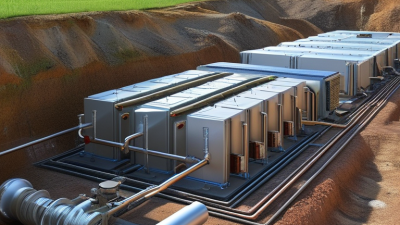
10 Geothermal Heat Pump Buying Tips for Global Buyers
Buying a geothermal heat pump is not simply a matter of comparing prices. Global buyers must connect equipment performance with local ground conditions, building loads, energy tariffs, and installation expertise. A system that performs well in northern Europe may need different design choices in Southeast Asia, where cooling demand, humidity, and soil moisture can change dramatically.
John W. Lund, a respected geothermal researcher, wrote, “The earth is a tremendous source of energy.” That principle guides this buying guide. A geothermal heat pump exchanges energy with stable underground temperatures, but its results depend on correct sizing, loop design, controls, and commissioning. Real project experience matters here. Ask suppliers for measured seasonal performance, not only laboratory ratings. Request references from buildings with similar climates and operating schedules.
Details often decide the outcome. Check horizontal or vertical loop options, available land, drilling access, refrigerant type, noise levels, warranty coverage, and replacement-part availability. Confirm whether local technicians can service pumps, valves, sensors, and control boards. Do not ignore water chemistry or soil geology. They can quietly increase maintenance costs.
No checklist removes every uncertainty. Some published efficiency figures also look better than real operation. Buyers should question assumptions, compare lifecycle costs, and allow space for professional review. These ten geothermal heat pump buying tips will help international purchasers identify credible manufacturers, avoid unsuitable specifications, and make a more resilient investment. The best choice may not be the cheapest unit. It is the system that performs reliably after the brochure is forgotten.

Define Building Loads Under EN 12831 Before Selecting Heat Pump Capacity
10 Geothermal Heat Pump Buying Tips for Global Buyers
Define Building Loads Under EN 12831 Before Selecting Heat Pump Capacity
A geothermal heat pump should be sized from the building’s calculated heat loss, not floor area alone. EN 12831 provides a structured method for estimating design heating load. It considers outdoor design temperature, indoor setpoints, transmission losses, ventilation, and heating interruptions. A qualified engineer should document each assumption.
Inspect the building envelope carefully. Record wall construction, window type, roof insulation, and air leakage. A 1990s house with draughty windows may need far more capacity than a newer house of the same size. Room-by-room calculations also reveal cold spaces, such as north-facing bedrooms or stairwells. Small details matter.
Do not copy a capacity from another project. Local climate data and national requirements can change the result. An oversized unit may cycle frequently, reduce efficiency, and increase installation costs. An undersized unit may rely heavily on backup heat during cold periods. Neither outcome is ideal.
Reality is sometimes untidy. Existing drawings may be incomplete, and occupants may use rooms differently than expected. Verify measurements on site, then compare calculated loads with utility records where available. Domestic hot-water demand should be assessed separately from space-heating load. Ground-loop design must also match the confirmed capacity, soil conditions, and seasonal operating pattern. A careful load report creates a defensible basis for equipment selection and future performance checks.
EN 12831 Design Heat Load Before Heat Pump Selection
Representative building-load examples calculated from floor area and design heat-loss intensity. The heat pump selection allowance is shown at approximately 10% above the calculated design load; final sizing should use a project-specific EN 12831 calculation and the manufacturer’s capacity at the required outdoor and water temperatures.
Example assumptions: residential buildings at 40–50 W/m², and non-residential buildings at 60–70 W/m² design heat loss. Domestic hot-water demand, extreme weather, distribution losses, and backup heating should be assessed separately.
Compare COP 3–5 and EER Values at EN 14511 Test Conditions
A geothermal heat pump with a COP of 5 delivers five units of heat for every unit of electricity at a test point. However, EN 14511 results must be compared carefully. Test conditions vary by equipment type, entering-water temperature, leaving-water temperature, and indoor airflow.
Compare matching data, not attractive numbers. A water-to-water unit tested at 0°C entering water and 35°C leaving water may show COP 4.8. At 45°C leaving water, that figure can fall sharply. For cooling, EER measures delivered cooling against electrical input under specified EN 14511 conditions. It is not the same as seasonal efficiency. Small differences matter.
Look beyond the headline.
The IEA’s The Future of Heat Pumps report recorded an 11% increase in global heat-pump sales in 2022. This growth makes transparent testing more important for international buyers. The EHPA European Heat Pump Market and Statistics Report also separates market performance by application and climate, showing why one laboratory result cannot represent every building.
From field experience, defrost cycles, circulation pumps, pipe insulation, and control settings can reduce real performance. A unit rated COP 4.5 may operate closer to 3.2 during colder mornings. That is not necessarily poor engineering. It may reflect higher water temperatures or poor commissioning. Ask for the complete EN 14511 test sheet, electrical input, sound level, refrigerant data, and part-load results. I would also request climate-specific seasonal figures. COP 5 looks impressive, but context decides its value.
10 Geothermal Heat Pump Buying Tips for Global Buyers - Compare COP 3–5 and EER Values at EN 14511 Test Conditions
| No. | Buying Dimension | What to Compare | Reference EN 14511 Condition | Indicative COP / EER Range | Practical Buying Tip |
|---|---|---|---|---|---|
| 1 | Heating efficiency | Coefficient of Performance (COP), expressed as heat output divided by electrical input. | B0/W35 or W10/W35 | COP 3.0–5.0 | For fair comparison, use the same source temperature, leaving-water temperature, and test method. A higher COP generally indicates lower electricity use at that test point. |
| 2 | Cooling efficiency | Energy Efficiency Ratio (EER), expressed as cooling output divided by electrical input. | Water entering/leaving conditions stated in the test report | EER 4.0–7.0 W/W | Do not compare EER values measured at different water temperatures. Confirm whether the published figure is EER in W/W or a seasonal rating in another unit. |
| 3 | Leaving-water temperature | Rated capacity and efficiency at low-temperature heating versus high-temperature heating. | Common heating points include W35 and W45 | COP often falls by about 10–25% when water temperature rises from 35°C to 45°C | Choose floor heating or suitably sized radiators where possible. Request separate performance data for every design water temperature. |
| 4 | Ground-loop design | Horizontal loop, vertical borehole, open-loop groundwater, or hybrid configuration. | Source-side temperature must be stated | Stable source temperatures support more consistent COP | Compare drilling, excavation, pumping, permitting, soil conditions, and available land before selecting the heat-pump unit. |
| 5 | Heating and cooling capacity | Nominal and part-load capacity in kW, including capacity at the local design outdoor or ground condition. | EN 14511 rated capacity point plus part-load data | Select from calculated building loads, not floor area alone | Oversizing can increase cycling and installation cost. Ask for a room-by-room or building-load calculation and minimum modulation capacity. |
| 6 | Seasonal performance | SCOP and SEER, which account for multiple operating conditions and seasonal demand. | Use EN 14825 seasonal ratings alongside EN 14511 test points | Seasonal values are not directly interchangeable with single-point COP or EER | Use seasonal ratings for annual energy estimates, while using EN 14511 values to verify comparable operating points. |
| 7 | Electrical requirements | Voltage, frequency, phase, maximum current, starting current, and backup-heater power. | Electrical input measured under the stated test condition | Verify compatibility with the local grid and tariff structure | Check whether circulation pumps, controls, fans, and auxiliary heaters are included in the declared input power. |
| 8 | Refrigerant and regulations | Refrigerant type, global-warming potential, charge size, safety classification, and service requirements. | Performance data should identify the refrigerant and test configuration | Efficiency must be balanced with local compliance and serviceability | Confirm import rules, installation restrictions, technician qualifications, and future refrigerant availability in the target market. |
| 9 | Noise and installation space | Sound-pressure or sound-power level, unit dimensions, service clearances, and vibration control. | Noise test method and distance must be identified | Compare only values measured using the same acoustic method | Indoor units commonly suit utility rooms, but access for filters, pumps, valves, and controls must be retained. |
| 10 | Documentation and lifecycle cost | Test report, certification, warranty, spare-parts support, commissioning procedure, and maintenance cost. | Request EN 14511 results with complete operating conditions | A transparent test report is more useful than an isolated headline COP | Compare purchase price, ground-loop work, commissioning, electricity, servicing, and expected replacement parts over the planned operating life. |
Note: COP and EER are dimensionless ratios when reported in W/W. The indicative ranges are general market reference bands, not ratings for a specific product. Always verify the exact EN 14511 test conditions, capacity, electrical input, and included auxiliary components in the official test documentation.
Select Loop Types Using Typical Borehole Output of 50–100 W/m
For geothermal heat pump buyers, loop selection should begin with the site, not the equipment brochure. A vertical closed-loop borehole commonly delivers about 50–100 W of thermal output per active metre. This is only a planning range. Granite, wet sand, dry clay, and fractured rock transfer heat differently.
Consider a building needing 12 kW of heating capacity. At 75 W/m, the early estimate requires about 160 metres of total active borehole length. That could mean two 80-metre boreholes, or four 40-metre boreholes. Spacing matters. Closely placed holes may exchange heat with each other and reduce long-term performance.
Vertical loops suit compact plots and colder climates, but drilling access can raise installation costs. Horizontal loops need more land and careful trench placement. They can work well where soil is moist and excavation is practical. Open-loop systems may use groundwater, yet water quality, filtration, discharge rules, and seasonal availability require professional assessment.
Do not treat 50–100 W/m as a guaranteed design value. A qualified designer should review soil reports, heating and cooling loads, borehole depth, pipe resistance, and local ground temperatures. I have seen attractive estimates fail when cooling demand was ignored. That mistake can leave the ground unbalanced.
Ask for the assumptions behind every calculation. Insist on thermal response testing for larger projects. Small details matter.
Calculate Lifecycle Costs and Target 25–50% HVAC Energy Savings
10 Geothermal Heat Pump Buying Tips for Global Buyers
Calculate lifecycle costs before comparing equipment prices. A geothermal heat pump can reduce HVAC energy use by 25–50% in suitable buildings, but results vary. Climate, insulation, ground temperature, system sizing, and electricity rates all matter. Request a modeled annual energy estimate from a qualified designer. Ask for assumptions, not just percentages. A low installation quote may hide drilling, trenching, controls, or electrical upgrades.
Tip: Compare total ownership costs over 15–25 years. Include purchase, design, ground-loop installation, commissioning, maintenance, repairs, electricity, and replacement parts. Use local tariffs and realistic operating hours. Payback alone can mislead. Net present value gives a clearer comparison. It also exposes uncomfortable details, such as high financing costs or poor seasonal performance.
Tip: Verify the installer’s experience with your soil and climate. Review measured performance from similar buildings, not laboratory claims alone. Confirm water quality, frost protection, noise levels, service access, and warranty responsibilities. A short site investigation can prevent expensive redesigns. Do not oversize the heat pump. Oversizing may increase cycling and reduce comfort, although this point is sometimes overlooked.
Set a target near 25–50% HVAC energy savings, then test it against a baseline. Keep weather, occupancy, and indoor temperature assumptions consistent. Add submetering where practical. Early data may reveal weaker results than expected. That is useful, not failure. It shows where controls, insulation, or operating habits need correction.
Verify Global Certifications, Refrigerants, Warranties, and Incentives
10 Geothermal Heat Pump Buying Tips for Global Buyers
Verify Global Certifications, Refrigerants, Warranties, and Incentives
A geothermal heat pump should carry certificates accepted in its destination market. Check CE, UKCA, or North American requirements where applicable. Also request ISO 13256-1 performance data. Do not rely on a marketing efficiency number. Confirm entering-water temperature, leaving-water temperature, flow rate, and test conditions. The IEA’s The Future of Heat Pumps 2022 reports that heat pumps could reduce global carbon dioxide emissions by over 500 million tonnes annually by 2030 under stated policies. However, performance depends heavily on ground design and installation quality.
Tip: Ask for the certificate number, testing laboratory, and production model. Verify them independently. A certificate alone does not prove local suitability. Refrigerant selection also deserves scrutiny. Request the refrigerant type, global warming potential, charge size, and service procedure. The UNEP 2022 Ozone Assessment states that full Kigali Amendment implementation could avoid up to 0.4°C of warming by 2100. Lower-impact refrigerants may support future compliance, but safety classifications and technician training still matter.
Tip: Read the warranty before comparing prices. Check compressor coverage, labor exclusions, replacement-part shipping, and minimum maintenance requirements. Confirm who performs repairs across borders.
Incentives can change yearly, and some programs require certified installers, energy audits, or pre-approval. Keep every document. A practical warning: published annual savings may not match a poorly sized loop or an unstable electricity tariff. Ask for a site-specific estimate using local soil conditions and utility rates. I would also leave room for uncertainty; no forecast remains perfect for twenty years.
Related Posts
-
How to Choose the Best Geothermal Heat Pump System for Your Needs?
-
Top 10 Benefits of Using a Geothermal Pump for Your Home?
-

What is a Spa Heat Pump and How Does it Work?
-

Why Is Geothermal Heating the Ideal Choice for Sustainable Home Energy
-
10 Tips for Energy Efficient Heating to Reduce Your Bills This Winter
-
How to Choose the Best Solar Heat Pump for Your Home?