Top 10 PIR Sensor Switch Types for Global Buyers
PIR Sensor Switch technology is becoming a practical control layer for homes, offices, warehouses, hotels, and public facilities. It detects changes in infrared radiation from moving bodies, then activates lighting or equipment without a wall switch. Simple in principle. Difficult in real spaces.
The UNEP Global Status Report for Buildings and Construction 2023 states that buildings consume about 30% of global final energy and create roughly 26% of energy-related emissions. These figures explain why occupancy-based control deserves closer attention. The IEA’s Energy Efficiency 2023 report also identifies efficiency as a major route for reducing energy demand. As Fatih Birol, Executive Director of the International Energy Agency, has said, “Energy efficiency is the first fuel.” A PIR Sensor Switch can support that principle by turning lights off in empty corridors, storage rooms, and washrooms.
Yet performance depends on details. A ceiling sensor may cover a broad office, while a wall-mounted unit can miss someone sitting still. Heat sources, glass partitions, pets, airflow, and installation height can create false triggers. No sensor is perfect. That assumption deserves scrutiny.
This guide compares the top 10 PIR Sensor Switch types for global buyers, including standalone, timer-based, dimming, outdoor, ceiling, wall, smart, and hybrid models. It considers detection range, wiring, voltage, IP rating, load compatibility, adjustment controls, and regional installation requirements. Product labels can mislead. Real-world testing matters more. The best choice is not always the most advanced model, but the one that matches movement patterns, room geometry, climate, and maintenance expectations.
How PIR Sensor Switches Detect Motion and Control Electrical Loads
Top 10 PIR Sensor Switch Types for Global Buyers
How PIR Sensor Switches Detect Motion and Control Electrical Loads
A PIR sensor switch detects changes in infrared energy from warm bodies. Its pyroelectric element responds when a person crosses several detection zones. A Fresnel lens divides the coverage area into these zones. Motion creates a changing signal, not merely a warm object standing still. This distinction matters in offices, corridors, warehouses, and washrooms.
The sensor sends that signal to a control circuit. The circuit activates a relay, triac, or other switching device. Power then reaches a lamp, ventilation fan, alarm, or compatible electrical load. Adjustable time delay keeps the load active after movement stops. A daylight setting can prevent switching during bright hours. Some designs offer manual override, sensitivity adjustment, or dual-circuit control.
Global buyers should compare ten common types, including wall, ceiling, outdoor, flush-mounted, surface-mounted, single-load, multi-load, timer-based, daylight-linked, and smart-connected versions. Check voltage, frequency, load category, switching capacity, wiring method, and neutral requirements. Resistive lamps and motors may behave differently during startup. A practical installation lesson is simple: avoid aiming the sensor toward heaters, moving curtains, or direct sunlight. False triggers still happen.
I have found that detection range claims can look impressive but vary by mounting height and temperature. Cold rooms may reduce practical coverage. Large metal objects can also affect placement. Testing the switch with the actual load remains more reliable than trusting a catalog alone.
Top 10 PIR Sensor Switch Types for Global Buyers
Typical sensing coverage and switching capacity vary by installation height, lens design, ambient temperature, and electrical regulations. The figures below represent common product specifications for comparison and should be verified against the final datasheet.
How PIR sensor switches work: A passive infrared sensor detects changes in infrared radiation caused by moving people or objects. The control circuit then turns connected lighting or electrical loads on or off according to the selected operating mode, time delay, and daylight settings.
Ten PIR Sensor Switch Types Explained by Design and Application
Top 10 PIR Sensor Switch Types for Global Buyers
Ten PIR Sensor Switch Types Explained by Design and Application
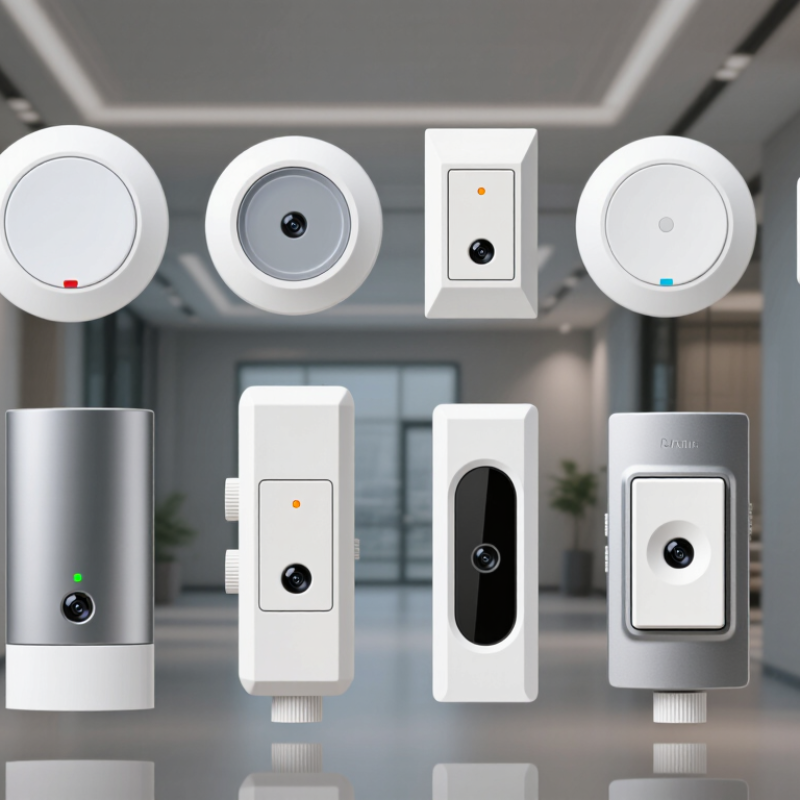
PIR sensor switches vary by coverage, mounting position, and control method. Ceiling-mounted models suit open offices, while wall-mounted units fit corridors and small rooms. Outdoor PIR switches use weather-resistant housings for entrances, gardens, and loading areas. High-bay versions detect movement beneath tall warehouse ceilings. Corner-mounted models cover two directions with fewer installation points. These designs sound similar. Their blind spots are not.
Micro-PIR switches target compact spaces, including cabinets, stair landings, and washrooms. Dual-technology switches combine PIR detection with another sensing method, reducing false triggers in unstable environments. Occupancy switches keep lights active after movement, while vacancy switches require manual activation and usually support stricter energy control. The United Nations Environment Programme reported in 2023 that buildings consume about 30% of global final energy. Small control decisions matter.
Dimming PIR switches adjust brightness instead of simply switching lights off. Wireless or networked PIR switches add scheduling, remote monitoring, and data collection for larger facilities. The U.S. Department of Energy identifies lighting as a significant commercial-building electricity load, often near 15%. Yet PIR is not magic. Poor placement, heat sources, or slow timeout settings can waste energy. Buyers should test detection distance, mounting height, ingress protection, relay capacity, and local electrical compatibility before ordering.
Key Specifications: Detection Range, Timing, Sensitivity, and Load Capacity
Top 10 PIR Sensor Switch Types for Global Buyers
The ten practical PIR switch types include wall, ceiling, corner, flush, surface-mounted, high-bay, outdoor, corridor, stairwell, and dimming models. Their value depends on four measurable specifications:
detection range, timing, sensitivity, and load capacity.
Typical indoor ranges extend from 6 to 12 meters, while high-bay units may reach 15 meters. Coverage can weaken behind shelving, glass, or large machinery. Testing on-site remains essential.
Timing usually ranges from 10 seconds to 30 minutes. Short delays suit bathrooms, while longer settings fit warehouses and offices. Sensitivity should detect a slow person, not trigger repeatedly from warm air or moving curtains.
Load capacity also needs careful checking. Many switches handle LED loads around 200 to 500 watts, but inrush current can exceed the printed rating. The U.S. Department of Energy reports occupancy controls may reduce lighting energy use by 10% to 90%, depending on space and operating conditions. That range is wide, and it should not be treated as a guaranteed result.
Tips: Confirm voltage, neutral-wire requirements, IP rating, and local wiring standards before purchasing. IEC 60669-2-1 provides useful guidance for electronic switches, but product testing conditions still differ. A lower sensitivity setting may prevent false activation, although it can miss a quiet occupant. That trade-off is easy to overlook.
Regional Standards, Wiring Formats, and Installation Requirements
Top 10 PIR Sensor Switch Types for Global Buyers
PIR sensor switches differ by detection range, mounting position, load type, and wiring format. Common options include wall, ceiling, corner, corridor, occupancy, vacancy, daylight-linked, timer, relay, and low-voltage models. A suitable type depends on the room, not only the product label.
Regional electrical practices require careful checking. Many North American installations use line, load, neutral, and grounding conductors, while some devices support no-neutral wiring. European and other markets may use different terminal layouts, colors, enclosure sizes, and voltage systems. Confirm whether the switch suits 120V or 230V networks, plus 50Hz or 60Hz operation. Do not assume a familiar diagram applies everywhere. Local standards and inspection rules can change by country, building type, and installation environment. For damp areas, verify the IP rating and required protective measures.
Tips: Photograph the existing wiring before removal. Check the circuit voltage with a tested meter. Compare terminal markings, box depth, load rating, and lamp compatibility. LED loads can create nuisance flicker when the sensor relay is unsuitable. A certified electrician should handle uncertain wiring or shared-neutral circuits. Even experienced installers occasionally miss grounding details. That small mistake matters. Test detection from the doorway, then adjust sensitivity, time delay, and daylight control after installation. A sensor may work perfectly on a bench but respond poorly near vents, heaters, reflective glass, or moving curtains.
| Rank | PIR Sensor Switch Type | Typical Applications and Control Function | Common Wiring Format | Regional Standards and Electrical Requirements | Key Installation Requirements |
|---|---|---|---|---|---|
| 1 | Single-Pole Wall-Mounted PIR Switch | Residential rooms, offices, utility rooms, and small commercial spaces. Automatically switches one lighting circuit when occupancy is detected. | Usually a line, neutral, switched line, and protective earth where required. Typical supply: 120 V AC in North America or 220–240 V AC in many other markets. | IEC 60669-2-1 Electronic switches should comply with the applicable national adoption of IEC requirements. United States: NEC Article 404 and applicable UL/CSA certification requirements. United Kingdom: BS 7671 wiring rules. | Install in a standard wall box at the manufacturer’s specified height. Keep away from heating vents, direct sunlight, and moving curtains. Confirm the minimum and maximum connected load, especially for LED drivers. |
| 2 | Two-Wire No-Neutral PIR Switch | Retrofit applications where the existing wall box contains only line and switched-line conductors. Suitable for lighting circuits specifically approved for no-neutral operation. | Two-wire connection through the load; the sensor draws a small operating current through the lamp. A bypass or load adapter may be needed for low-wattage LED lamps. | Must meet the applicable electronic-switch safety requirements, including IEC 60669-2-1 or its national equivalent. North American installations must follow NEC requirements and local approval rules. | Verify compatibility with the lamp or driver before installation. Do not connect a neutral conductor unless the device is designed for it. Avoid use with loads that may flicker, glow, or fail to turn fully off. |
| 3 | Ceiling-Mounted Occupancy PIR Sensor | Offices, classrooms, corridors, retail areas, and open-plan spaces. Provides wide-area automatic lighting control and adjustable time delay. | Line, neutral, switched line, and protective earth where applicable. Relay output may directly switch a lighting load or control a contactor. | IEC 60669-2-1 is commonly relevant for automatic electronic switching devices. Building wiring must comply with local rules such as BS 7671, NEC, CEC, AS/NZS 3000, or equivalent national codes. | Mount near the center of the detection zone where possible. Observe the specified ceiling height and detection diameter. Avoid obstructions such as beams, partitions, large light fixtures, and air-conditioning outlets. |
| 4 | Vacancy Sensor with Manual-ON Control | Offices, bedrooms, classrooms, and energy-conscious commercial spaces. The user turns the lights on manually; the PIR sensor turns them off after vacancy. | Commonly wired as line, neutral, switched line, and optional manual control input. Some models use a dedicated momentary push-button input. | Applicable switch safety requirements generally follow IEC 60669-2-1 or local equivalents. In the United States, automatic lighting controls may also be subject to energy-code provisions such as IECC or ASHRAE 90.1, depending on the project. | Set the timeout according to room use and local energy requirements. The manual switch must be compatible with the sensor input. Ensure the sensor has a clear view of the occupied area. |
| 5 | Corridor and Stairwell PIR Switch | Corridors, staircases, apartment common areas, storage aisles, and passageways. Provides timed lighting and may support multiple sensors for extended coverage. | Single or multi-sensor control using parallel switched outputs, a relay, or a lighting-control bus. High-load circuits are often controlled through a contactor. | Installation must comply with the local low-voltage wiring code, including BS 7671, NEC, CEC, AS/NZS 3000, or the applicable national standard. Emergency lighting circuits must remain separately compliant with local emergency-lighting regulations. | Use overlapping detection zones to avoid dark spots. Set a suitable minimum hold time for safe movement on stairs. Do not allow the sensor to switch off legally required emergency or egress lighting. |
| 6 | Dual-Technology PIR and Microwave Sensor Switch | Warehouses, offices, meeting rooms, and areas where PIR-only detection may be affected by partitions or low movement. Combines passive infrared and microwave detection to reduce false switching. | Line, neutral, switched line, and protective earth where required. Some units provide separate relay outputs or low-voltage control terminals. | The mains switching section should meet the applicable switch standard, commonly IEC 60669-2-1 or its national equivalent. Microwave operating frequency and radio emissions must comply with regional rules; requirements differ between the EU, United States, Canada, Australia, and other markets. | Follow the specified mounting orientation and microwave detection limits. Avoid installation near large metal surfaces, vibrating equipment, or sensitive electronic systems. Adjust sensitivity to prevent detection beyond the intended room or property boundary. |
| 7 | Outdoor and Wet-Area PIR Sensor Switch | Entrances, carports, covered walkways, gardens, service yards, bathrooms, and other locations exposed to moisture or condensation. | Line, neutral, switched line, and protective earth where required. Cable glands, junction boxes, and enclosures must be suitable for the installation environment. | Enclosure protection is classified using IEC 60529 IP ratings. Common selections include IP44 for limited splash protection and higher ratings such as IP54, IP55, or IP65 for more demanding locations. Local outdoor and wet-location wiring rules remain applicable. | Select the IP rating according to actual exposure, not only the product name. Use approved cable entries and maintain enclosure seals. Avoid direct exposure to sprinklers, reflected sunlight, and rapidly changing heat sources. |
| 8 | PIR Sensor with 0–10 V Dimming Output | Offices, classrooms, healthcare spaces, and commercial interiors requiring occupancy-based dimming. Can switch or dim compatible LED drivers and maintain a low standby level. | Mains supply conductors plus separate 0–10 V control pair. The control pair is normally treated as a separate low-voltage circuit and must be installed according to local segregation rules. | IEC 60929 is widely associated with control interfaces for fluorescent or electronic lighting control gear; LED driver requirements may also involve IEC 61347 and IEC 62384. Follow local wiring rules for separation between mains and control wiring. | Confirm whether the control output is sourcing or sinking and match it to the driver. Observe polarity where specified. Do not route the 0–10 V pair together with mains conductors unless local rules and the wiring system permit it. |
| 9 | PIR Sensor with DALI or Digital Lighting Control | Large offices, hotels, schools, hospitals, and smart-building projects. Supports addressable lighting, grouped scenes, dimming, and occupancy-based energy management. | Mains supply to the luminaire or driver plus a two-wire DALI control bus. The DALI bus is polarity-insensitive in typical systems, but installation must follow the equipment documentation and local code. | IEC 62386 defines the DALI digital lighting-control system and device characteristics. Mains wiring remains subject to local rules such as IEC-based national standards, BS 7671, NEC, CEC, or AS/NZS 3000. | Check the bus power budget, device addressing, and maximum system length. Keep control wiring within the permitted voltage class and segregation requirements. Commission sensor timeouts, detection zones, and daylight settings after installation. |
| 10 | Low-Voltage Remote PIR Sensor with Relay or Controller | Security-integrated lighting, HVAC control, access areas, ceilings with limited mains access, and building-management systems. The sensor operates at extra-low voltage while a separate controller switches the load. | Two-wire, three-wire, or multi-core low-voltage cable to a controller or relay module. The controller may provide a dry contact, powered relay output, or communication-bus interface. | The sensor circuit may fall under extra-low-voltage requirements, while the controller and switched mains circuit must meet the relevant local standards. IEC 60364 principles and national wiring codes apply according to the system design and voltage level. | Keep extra-low-voltage wiring separated from mains wiring unless the cable and installation method are approved for combined use. Confirm polarity, cable length, voltage drop, and controller input current. Install the relay or contactor in an accessible, suitably rated enclosure. |
How Global Buyers Can Compare and Select the Right PIR Switch
Top 10 PIR Sensor Switch Types for Global Buyers
Global buyers should compare PIR switches by application, not appearance. A hallway needs different detection performance from a warehouse or outdoor entrance. Check the sensing range, detection angle, mounting height, and response time. For example, an eight-meter corridor may need a narrow, directional sensor. A small office may perform better with a wide-angle wall switch.
Review the electrical details carefully. Confirm the rated voltage, maximum load, switching method, and neutral-wire requirement. Some models suit LED lighting, while others may flicker under low loads. Check the time-delay range too. A short delay can waste comfort; a long delay can waste energy. Outdoor installations require suitable ingress protection and stable performance across temperature changes. Verify required safety certifications for the destination market.
A practical comparison should include ceiling, wall, outdoor, occupancy, vacancy, and adjustable-range types. Dual-technology models can reduce false triggers, but they may cost more and require better installation. Ask suppliers for test data, wiring diagrams, and sample units. A neat comparison table can mislead. Real rooms contain glass doors, moving curtains, warm air, and pets. I would test a switch at the actual mounting height before placing a large order. Even experienced buyers sometimes trust the stated range too much. Installation quality can matter as much as the sensor itself.