What is a Thermo Pump and How Does It Work?
A thermo pump is a versatile device. It transfers heat from one place to another. This technology has gained popularity in heating and cooling systems.
Understanding how a thermo pump works is crucial. It operates by utilizing the principles of thermodynamics. The pump can draw heat from the environment or release it based on the need. Many homes use thermo pumps to regulate indoor temperatures efficiently.
Although effective, users often face challenges. Installation can be complex, and a proper setup is necessary for optimal performance. Future improvements in design may address these issues. Exploring the potential of thermo pumps reveals both benefits and areas needing reflection.
Understanding Thermo Pumps: An Overview
Thermo pumps are versatile devices that transfer heat from one location to another. They can both heat and cool spaces. This dual functionality makes them popular for residential and commercial applications. Understanding their design is crucial. They operate using refrigerant, which absorbs and releases heat as it circulates.
One of the main components is the compressor. It pressurizes the refrigerant, increasing its temperature. The hot refrigerant moves to the condenser. Here, it releases heat, and the refrigerant turns back to a liquid. The cycle repeats, providing heating or cooling as needed. It's fascinating how this process works in harmony.
Tips: Regular maintenance is vital for efficiency. Check filters every month. Clean coils to enhance performance. Never ignore unusual noises; they could signal possible issues. Balancing comfort with energy use is essential. Consider your climate and usage patterns when managing your system. Adjust settings based on seasons for optimal efficiency.
The Basic Principles of Thermodynamics in Pump Design
Thermo pumps operate based on the principles of thermodynamics. They transfer heat from one place to another. This involves using energy to move heat effectively.
At its core, a thermo pump uses the refrigerant as a medium. The refrigerant absorbs heat at low temperatures and releases it at high temperatures.
In essence, the first law of thermodynamics is crucial here. It states that energy cannot be created or destroyed. Instead, it can only change forms. This law is fundamental in pump design. However, energy loss during the transfer can occur. If not managed, it reduces overall efficiency.
The second law of thermodynamics also plays a role. It addresses the direction of heat transfer. Heat naturally flows from hot to cold.
Thermo pumps must work against this natural flow. This poses challenges in design and operation. Inefficiencies can lead to higher operational costs.
Balancing efficiency and effectiveness requires continuous improvement.
Components of a Thermo Pump and Their Functions
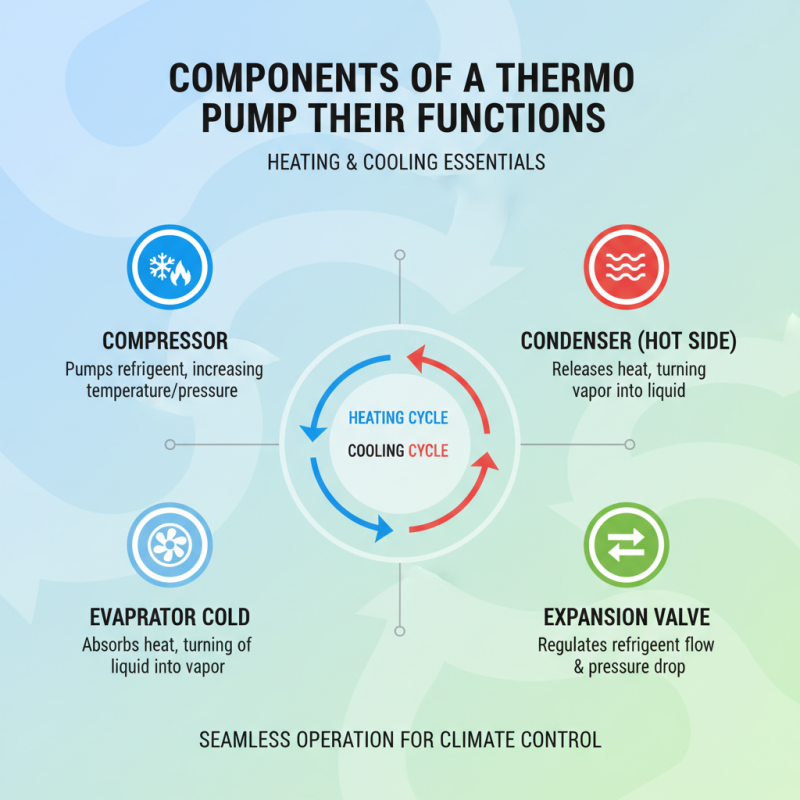
A thermo pump is an essential device for heating and cooling. Its effectiveness lies in understanding its core components. Each part offers specific roles that work together seamlessly.
The compressor is the heart of the pump. It compresses the refrigerant, increasing its pressure and temperature. Next, the condenser transforms the refrigerant from a gas to a liquid. This process releases heat, which is utilized for heating applications. The expansion valve controls the flow of refrigerant. It regulates pressure and temperature, preparing the refrigerant for the evaporator. This device rejuvenates the refrigerant by allowing it to absorb heat from the surroundings.
Here’s a tip: Regularly check the compressor for signs of wear. If it operates loudly or inefficiently, it may need professional attention. Also, keep the condenser coil clean. A dirty coil reduces efficiency. Lastly, ensure the expansion valve isn’t clogged, as this restricts the refrigerant flow. Small issues can snowball into larger problems if left unaddressed.
How a Thermo Pump Operates in Heating and Cooling Applications
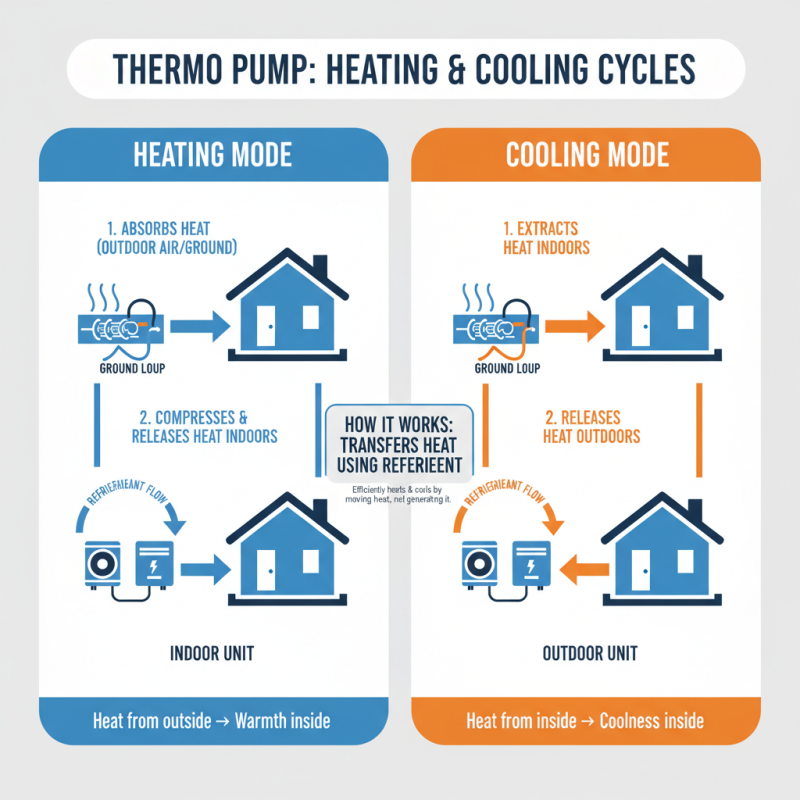
A thermo pump operates by transferring heat from one location to another. It uses a fluid called refrigerant, which circulates through a system of coils. In heating mode, the pump absorbs heat from the outside air or ground. It then compresses the refrigerant and releases heat indoors. Conversely, in cooling applications, it extracts heat from indoor air to cool the space.
According to the U.S. Department of Energy, heat pumps can provide up to 400% efficiency compared to traditional systems. This means they can deliver four units of heat for every unit of energy consumed. However, their efficiency decreases in extremely cold climates. At lower temperatures, heat extraction becomes challenging, which may require supplemental heating sources.
Many users underestimate installation complexity. A poorly installed system can lead to inefficiencies. Regular maintenance is essential. Dust accumulation in coils can restrict airflow, affecting performance. Although stats show significant energy savings, some homes may not benefit equally. Geographical and structural factors play a significant role in a thermo pump's efficiency.
Applications and Advantages of Using Thermo Pumps in Various Industries
Thermo pumps are gaining traction across various industries due to their efficiency and versatility. They operate by transferring heat from one location to another, making them ideal for heating, cooling, and even energy generation. In agriculture, for instance, thermo pumps can provide temperature control for greenhouses. This ensures optimal growing conditions year-round, which is crucial for crop yield.
In the HVAC sector, thermo pumps serve both residential and commercial spaces. They reduce energy costs by utilizing ambient heat. This is significant, especially in regions with extreme temperatures. However, they might not be the best choice in very cold climates. Performance can diminish when temperatures drop too low, posing a challenge for some users.
Moreover, the industrial sector benefits from thermo pumps in processes requiring precise temperature regulation. Industries like pharmaceuticals and food production rely on consistent conditions for quality and safety. However, the initial investment can be a hurdle for smaller firms. While energy savings are impressive, the upfront costs require careful consideration. Balancing efficiency with expenses is a common dilemma for many businesses.