How to Choose an Electric Gate Valve in 2026?

Choosing an Electric Gate Valve in 2026 requires more than comparing connection sizes or purchase prices. The correct choice must match pressure, temperature, media, operating frequency, and emergency requirements. A valve installed on a muddy water line faces different risks from one controlling steam, chemicals, or chilled water. Field experience shows that small errors in torque calculation can cause slow travel, actuator overheating, or incomplete closure.

Industry reports provide useful context. The UN World Water Development Report 2024 states that agriculture represents roughly 70% of global freshwater withdrawals. This increases demand for dependable flow control across irrigation and treatment systems. The International Energy Agency has also reported that electric motor systems consume about 53% of global electricity. Efficient actuators, suitable duty cycles, and accurate torque sizing therefore deserve serious attention. Market studies from Grand View Research and MarketsandMarkets indicate continuing investment in industrial valves, automation, and water infrastructure. Their forecasts differ, however, because market definitions and regional assumptions are not identical. That is worth remembering.

A practical evaluation should examine body material, wedge design, stem protection, enclosure rating, control signal, and maintenance access. Check whether the actuator supports local control, remote feedback, and manual override. In outdoor installations, moisture can enter through neglected cable glands. In dusty plants, a weak enclosure may fail earlier than expected. ISO 5210 or ISO 5211 compatibility can simplify actuator mounting, but standards alone do not guarantee suitability. This guide explains how to select an Electric Gate Valve with evidence, caution, and realistic operating details. The perfect specification does not exist. The safest decision usually comes from matching the valve to its actual service conditions.
How to Choose an Electric Gate Valve in 2026?

What Is an Electric Gate Valve and How Does It Work?

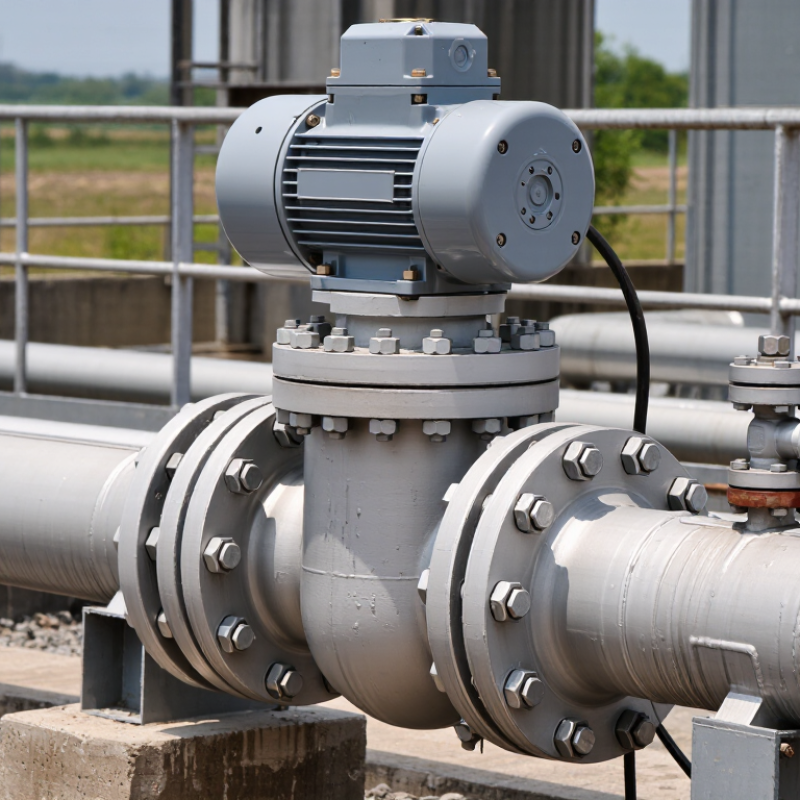
An electric gate valve controls fluid flow by raising or lowering a gate inside the valve body. An electric actuator turns the stem, moving the gate perpendicular to the pipeline. When fully open, the gate leaves a broad passage for low pressure loss. When fully closed, it blocks the line firmly. It is not designed for frequent throttling. Partial opening can damage the gate and sealing surfaces.

During field inspections, technicians often check the actuator, stem, limit switches, and enclosure condition. The actuator stops when the gate reaches its open or closed position. Torque protection can also stop movement when debris or excessive pressure creates resistance. This detail matters. A valve may fit the pipe but still fail if its actuator lacks enough torque. Power supply, control signals, ambient temperature, and emergency operating requirements also need careful review.

For a 2026 installation, consider position feedback and basic diagnostic data. These features can reveal stalled travel, unusual torque, or repeated operating cycles. Select body materials and seals for the actual medium, pressure, temperature, and pipe size. A weatherproof enclosure suits outdoor service, but corrosion protection may still be necessary near saltwater. Electric operation is convenient, yet it depends on reliable power. That weakness is easy to overlook. In some systems, manual override or backup operation deserves more attention than advanced connectivity. Calibration should be tested after installation, because a small limit-switch error can leave the gate partly open.

Which Fluid, Pressure, and Temperature Conditions Must Be Assessed?

Choosing an electric gate valve in 2026 starts with the fluid, not the actuator. Record the fluid’s concentration, viscosity, solids content, and cleanliness. Small particles can score the seating surfaces. Corrosive media can attack the body, stem, or seals. Do not rely on the fluid name alone. Its chemistry may change during cleaning, heating, or mixing. A compatibility chart helps, but actual operating samples deserve review. Keep it practical.

Pressure assessment must include normal, maximum, and transient values. Water hammer can exceed the gauge reading by a wide margin. Check pressure at both open and closed conditions. Confirm the valve’s pressure class matches the real system temperature. Higher temperatures often reduce allowable pressure. Steam service needs special attention to condensation and thermal cycling. For dirty or abrasive fluids, ask whether the gate valve suits throttling. Usually, it does not. Use it mainly for isolation unless the design data supports another duty.

Temperature is more than a single number. Capture start-up, shutdown, ambient, and upset temperatures. Compare them with seat, packing, enclosure, and actuator limits. Cold service may make elastomers stiff. Hot service may accelerate leakage or packing wear. Electric actuators also need adequate torque, duty rating, protection, and manual override arrangements. Field experience shows that torque calculations sometimes rely on clean water. That can be a poor assumption. Sediment, corrosion, and infrequent operation may increase breakaway torque. Ask for documented test data, installation guidance, and maintenance intervals before purchase. Recheck the calculation when conditions change.

How to Select the Right Valve Size, Material, and Actuator

How to Choose an Electric Gate Valve in 2026?

Select the valve size from flow, pressure, temperature, and shutoff conditions. Pipe diameter alone is not enough. A four-inch line may still require a different gate-port design. Oversizing can slow operation and increase actuator cost. Undersizing creates unnecessary pressure loss. Gate valves should isolate flow, not regulate it continuously.

Material selection follows the fluid and environment. Carbon steel suits many ordinary water and oil services. Stainless steel is safer for corrosive fluids, salty air, or hygienic systems. Check chloride concentration, temperature, pressure class, and gasket compatibility. ASME B16.34 pressure-temperature ratings provide a useful verification point. The decision remains imperfect when fluid chemistry changes seasonally. Request laboratory data when corrosion risk is uncertain.

Actuator sizing deserves careful attention. Calculate seating, unseating, and stem torque, then check the full travel time. Add a controlled margin, rather than guessing. ISO 5210 helps confirm the valve-actuator interface. Select the correct voltage, enclosure rating, duty cycle, manual override, and position feedback. The U.S. Department of Energy’s Industrial Decarbonization Roadmap reports that motor-driven systems consume about 70% of industrial electricity. Efficiency matters, even for a small actuator. The IEA’s Energy Efficiency 2024 report also recorded only a modest global improvement in energy intensity, reinforcing the value of efficient equipment. In wet locations, verify IP protection and cable entry details. Small installation oversights can defeat otherwise sound engineering.

How to Choose an Electric Gate Valve in 2026? - How to Select the Right Valve Size, Material, and Actuator

Use this comparison table as a preliminary selection guide. Final valve and actuator selection should be confirmed against the piping specification, fluid properties, applicable standards, and the manufacturer's certified torque and pressure data.

Electric Gate Valve Selection Matrix by Service Conditions
Application / Service Typical Nominal Size Typical Pressure and Temperature Recommended Body and Bonnet Material Gate, Stem, and Seat Materials Recommended Electric Actuator Important Selection Considerations
Municipal drinking water DN50–DN600
NPS 2–NPS 24
PN10 or PN16
Approximately 0–60°C
Ductile iron body, commonly EN-GJS-400-15 or equivalent, with a corrosion-resistant coating Ductile-iron or stainless-steel wedge;
stainless-steel stem;
EPDM resilient seat
Electric multi-turn actuator with open/close or modulating control;
IP68 enclosure is commonly selected for buried or flooded valve chambers
Select a valve suitable for potable-water contact. Verify coating, elastomer approval, face-to-face dimensions, buried-service requirements, and the applicable water-valve standard such as EN 1074-2 or AWWA requirements.
Raw water and irrigation DN80–DN1000
NPS 3–NPS 40
PN6–PN16
Approximately 0–50°C
Ductile iron or cast iron, depending on the specified pressure rating and local standard Resilient-seated ductile-iron wedge;
stainless-steel stem;
EPDM seat for compatible water service
Multi-turn actuator with high starting torque and local position indication;
optional remote control through digital inputs or fieldbus
Account for suspended solids, infrequent operation, outdoor exposure, and possible shaft extension. Use a higher corrosion-protection level where water contains chlorides or aggressive chemicals.
General industrial cooling water DN50–DN800
NPS 2–NPS 32
PN10–PN40 or ASME Class 150–300
Approximately 0–120°C
Carbon steel, stainless steel, or ductile iron according to pressure, corrosion, and piping specification Stainless-steel stem;
resilient or metal seat;
stainless-steel or coated wedge
Electric multi-turn actuator sized for the valve's measured or certified stem thrust and operating torque Check water chemistry, chloride concentration, differential pressure, flow direction, and whether the valve is intended only for isolation. Gate valves should normally be fully open or fully closed rather than used for continuous throttling.
Saturated steam DN50–DN300
NPS 2–NPS 12
Commonly ASME Class 150–300
Temperature may reach approximately 180–235°C depending on pressure
Carbon steel or alloy steel body and bonnet suitable for the specified pressure-temperature rating Metal-seated wedge;
stainless-steel stem;
graphite packing and gasket materials rated for steam service
Multi-turn electric actuator with a suitable thrust unit, thermal protection, and fail-position strategy defined by the process design Do not use ordinary water-service EPDM seats or unverified elastomers. Confirm pressure-temperature ratings, thermal expansion, packing arrangement, insulation requirements, and actuator protection from heat.
High-temperature process gas DN50–DN500
NPS 2–NPS 20
ASME Class 150–600
Approximately 150–450°C, depending on material and design
Carbon steel, low-alloy steel, or stainless steel selected for the design temperature Metal-seated wedge;
stainless or alloy-steel stem;
flexible graphite packing where permitted
Multi-turn actuator with a separated or heat-shielded mounting arrangement when required Verify fugitive-emission requirements, thermal expansion, stem thrust, packing temperature limits, and actuator ambient-temperature limits. A standard actuator may require a stem extension or heat barrier.
Hydrocarbon and refined-product isolation DN50–DN600
NPS 2–NPS 24
ASME Class 150–600
Approximately −29–200°C, subject to fluid and material selection
Carbon steel or stainless steel manufactured to the project piping class Metal or resilient seat according to fluid, temperature, and fire requirements;
stainless-steel stem;
graphite packing where required
Electric multi-turn actuator with weatherproof or hazardous-area certification as required by the installation Confirm fire-safe design, anti-static continuity, fugitive-emission performance, electrical-area classification, emergency operating requirements, and compatibility with the process fluid.
Corrosive chemical service DN25–DN300
NPS 1–NPS 12
Commonly PN10–PN40 or ASME Class 150
Approximately −20–150°C, depending on the chemical
Stainless steel, duplex stainless steel, nickel alloy, or lined construction selected from corrosion data Material must be matched to the chemical;
PTFE, PFA, ceramic, or alloy components may be required;
seat selection depends on temperature and permeation resistance
Electric multi-turn actuator with corrosion-resistant enclosure and remote mounting if the environment is aggressive Do not select materials from fluid name alone. Verify concentration, contaminants, temperature, velocity, crevice corrosion, galvanic effects, and compatibility of every wetted component.
Wastewater with abrasive solids DN80–DN600
NPS 3–NPS 24
PN6–PN16
Approximately 0–60°C
Ductile iron, cast iron, or stainless steel according to corrosion and abrasion conditions Coated or stainless-steel gate;
stainless-steel stem;
resilient seat only when compatible with solids and operating frequency
High-torque multi-turn actuator with position feedback and adjustable travel limits Evaluate solids size, fibrous material, sediment, cleaning frequency, and the risk of seat obstruction. For severe slurry or knife-gate duties, a dedicated slurry or knife-gate design may be more suitable than a conventional wedge gate valve.
Valve Size, Material, and Actuator Selection Checkpoints
Selection Dimension Practical Data or Range How to Apply It Common Mistake to Avoid
Nominal valve size Common equivalents include:
DN50 ≈ NPS 2;
DN80 ≈ NPS 3;
DN100 ≈ NPS 4;
DN150 ≈ NPS 6;
DN200 ≈ NPS 8;
DN250 ≈ NPS 10;
DN300 ≈ NPS 12;
DN400 ≈ NPS 16;
DN500 ≈ NPS 20;
DN600 ≈ NPS 24
Start with the connected pipe size, then verify required flow capacity, allowable velocity, pressure drop, flange dimensions, and available installation space. Choosing a smaller valve solely to reduce purchase cost can increase pressure loss and operating torque. Choosing a larger valve can reduce controllability and increase actuator and installation costs.
Pressure rating Water valves commonly use PN6, PN10, PN16, or PN25.
Industrial valves may use ASME Class 150, 300, 600, or higher.
Select the rating from the maximum operating pressure, design pressure, pump shutoff pressure, surge pressure, and design temperature. Treating PN16 and ASME Class 150 as universally interchangeable is incorrect. Flange dimensions, pressure-temperature ratings, and face-to-face dimensions must be checked.
Body and bonnet material Ductile iron: common in water distribution.
Carbon steel: common in industrial and hydrocarbon service.
Stainless or duplex steel: used where corrosion resistance is required.
Match the body material to pressure, temperature, corrosion, mechanical loads, and applicable material standards. Selecting stainless steel automatically does not guarantee compatibility. Different stainless grades have different resistance to chlorides, acids, and reducing environments.
Seat material EPDM: commonly used for compatible water service.
PTFE: broad chemical resistance but temperature and creep limits must be checked.
Metal seat: preferred for higher temperature, abrasive, or fire-safe applications when properly designed.
Confirm compatibility with fluid, temperature, pressure differential, solids, cycling frequency, and required leakage class. Using an elastomer seat outside its temperature or chemical limits can cause swelling, hardening, leakage, or premature failure.
Actuator type Gate valves generally require a multi-turn actuator because the stem travels through multiple revolutions or produces linear thrust through a stem nut. Select an actuator and gearbox combination based on required stem thrust, operating torque, speed, duty cycle, enclosure, control mode, and available power supply. Selecting an actuator only by valve diameter is unreliable. Two valves of the same size can require substantially different torque because of seat design, pressure differential, packing friction, and service conditions.
Actuator torque and thrust Required output should cover breakaway torque, running torque, seating or unseating torque, stem thrust, and a documented engineering margin. Obtain certified torque-thrust data for the exact valve configuration. Check both opening and closing directions, especially at maximum differential pressure. Using only the nominal running torque may leave insufficient capacity for initial unseating, cold conditions, sediment, corrosion, or extended periods without operation.
Control and feedback Basic isolation: open/close control with limit switches.
Process positioning: modulating control with position feedback.
Remote systems: digital communication or analog feedback as specified.
Define control voltage, motor phase, frequency, fail position, local control, emergency stop, interlocks, position indication, and communication requirements. A gate valve is normally an isolation valve, not a continuous throttling valve. Frequent throttling can cause vibration, erosion, noise, and seat damage unless the valve is specifically designed for that duty.
Environmental protection Indoor dry areas may use standard weatherproof enclosures.
Outdoor or flood-prone locations commonly require higher ingress protection, such as IP65–IP68, according to the installation.
Consider rain, flooding, humidity, salt spray, dust, ambient temperature, UV exposure, hazardous-area classification, and maintenance access. The valve may be suitable for outdoor service while the actuator is not. The actuator enclosure, cable entries, coatings, and heater requirements must be checked separately.
Applicable standards Common references may include EN 1074-2 for water-supply gate valves, ASME B16.34 for valve pressure-temperature and design requirements, API 600 for certain bolted-bonnet steel gate valves, and ISO 5210 for multi-turn actuator attachment. Use the standards required by the project, jurisdiction, industry, and end user. Verify edition, certification, testing, and dimensional requirements. Listing a standard without confirming its scope does not establish compliance. The valve, actuator, flange connection, testing, and materials may be covered by different standards.
Engineering note: The values shown are typical preliminary ranges rather than a substitute for a valve datasheet or process calculation. Before purchase, confirm design pressure, design temperature, fluid composition, flow direction, differential pressure, required leakage performance, installation orientation, actuator torque and thrust, electrical supply, hazardous-area requirements, and the applicable project standards.

What Control, Power, Safety, and Certification Features Are Required?

How to Choose an Electric Gate Valve in 2026?

Start with the process. Decide whether the valve needs isolation or regular throttling. On-off service usually needs open and closed limit feedback. Modulating service needs position control, torque monitoring, and a stable 4–20 mA signal. Specify fail-open, fail-closed, or fail-in-place behavior before selecting the actuator. A neat datasheet is not proof. Site temperature, pipe vibration, condensation, and cycling frequency often expose weak assumptions.

Power selection deserves equal attention. Confirm voltage, phase, starting current, duty rating, and enclosure protection. The U.S. Department of Energy reports that motor-driven systems consume about 23% of American electricity. Efficient actuator sizing can therefore reduce avoidable electrical demand. Include a manual override, local control station, and an emergency power strategy. Noise matters. Battery backup may preserve safe positioning, but it cannot replace correct torque calculations.

Safety and certification must match the application, not marketing language. Use IEC 60529 ingress ratings for enclosure protection, and assess hazardous areas under the applicable IEC 60079 requirements. Functional safety claims should reference IEC 61508 or ISO 13849, with validation for the complete safety loop. The IEA’s Energy Efficiency 2023 report places industry near 37% of global final energy use, making reliable isolation increasingly important. Request test records, material certificates, pressure data, and traceable calibration results. Do not guess. Local conformity rules may differ, and certification status should be verified for the installation country.

How to Compare Installation, Maintenance, Cost, and Service Life?

How to Choose an Electric Gate Valve in 2026?

Installation often decides whether an electric gate valve performs reliably. Check pipeline size, valve weight, actuator torque, and available voltage before ordering. The mounting area should leave space for wiring and manual operation. Measure twice. A qualified technician should verify alignment, grounding, limit switches, and emergency shutdown settings during commissioning.

Maintenance affects both operating cost and service life. Inspect the stem, seals, terminal connections, and enclosure after installation. Dust, moisture, vibration, and frequent cycling can accelerate wear. Keep records. Cycle testing can reveal slow movement before the valve stops completely. In field reviews, a common mistake is ignoring the manual override until a power failure occurs.

Purchase price is only one part of the comparison. Add installation labor, cabling, control equipment, inspection time, energy use, and possible production downtime. A cheaper valve may require more frequent adjustment or earlier seal replacement. I once underestimated access costs on a crowded pipeline, and the final maintenance bill was higher than expected. That experience changed how I compare quotations. For service life, examine cycle ratings, corrosion resistance, enclosure protection, spare-part availability, and operating temperature. Ask for test records and clear maintenance intervals, not vague durability claims. A valve used twice daily has different demands from one operating every few minutes.

Article Source: