Top 5 Benefits of the Organic Rankine Cycle for Renewable Energy?
The organic Rankine cycle (ORC) has emerged as an important technology in the field of renewable energy. This innovative method allows for efficient energy conversion from low-temperature heat sources. It plays a vital role in making renewable energy sources more accessible and cost-effective.
In recent years, the organic Rankine cycle has gained attention for its significant benefits. It can recover waste heat from industrial processes, improving overall energy efficiency. As industries seek sustainable solutions, ORC stands out as a practical choice. However, some may question its initial investment costs and technical challenges.
Despite these concerns, the advantages of the organic Rankine cycle are compelling. It can help reduce greenhouse gas emissions while harnessing abundant resources. By exploring its top benefits, we can better appreciate how ORC contributes to a sustainable energy future.
Benefits of the Organic Rankine Cycle in Harnessing Renewable Energy Potential
The Organic Rankine Cycle (ORC) is gaining traction in renewable energy. It utilizes low-temperature heat sources effectively. This technology is notable for its efficiency in converting thermal energy into electricity. By harnessing waste heat from industries and renewable sources, ORC systems contribute significantly to sustainable energy solutions.
One of the compelling benefits of ORC is its ability to utilize renewable resources. Geothermal energy and biomass are prime examples. These sources have less environmental impact compared to fossil fuels. However, implementing ORC systems may require substantial initial investment. This can be a barrier for small-scale operations. It's an important consideration for decision-makers.
Tips: When considering ORC technology, evaluate the heat source thoroughly. Understand the local climate and resource availability. Collaborating with experts can help optimize system design. Additionally, stay updated on regulatory incentives that can ease financial pressures. The potential of ORC in renewable energy is promising but requires careful planning and commitment.
Top 5 Benefits of the Organic Rankine Cycle for Renewable Energy
| Benefit |
Description |
Impact |
| Efficient Energy Conversion |
Converts low-temperature waste heat into usable electricity. |
Enhances overall energy efficiency. |
| Versatility of Heat Sources |
Can utilize heat from various renewable sources like geothermal, biomass, and solar thermal. |
Broadens the application of renewable energy technologies. |
| Scalability |
Can be designed for small or large-scale applications. |
Flexibility to meet diverse energy needs. |
| Environmentally Friendly |
Reduces greenhouse gas emissions compared to conventional power generation. |
Contributes to climate change mitigation. |
| Cost-Effective Operations |
Lower operational and maintenance costs due to simpler technology. |
Improves the economic viability of renewable projects. |
Enhanced Energy Efficiency through Low-Temperature Heat Source Utilization
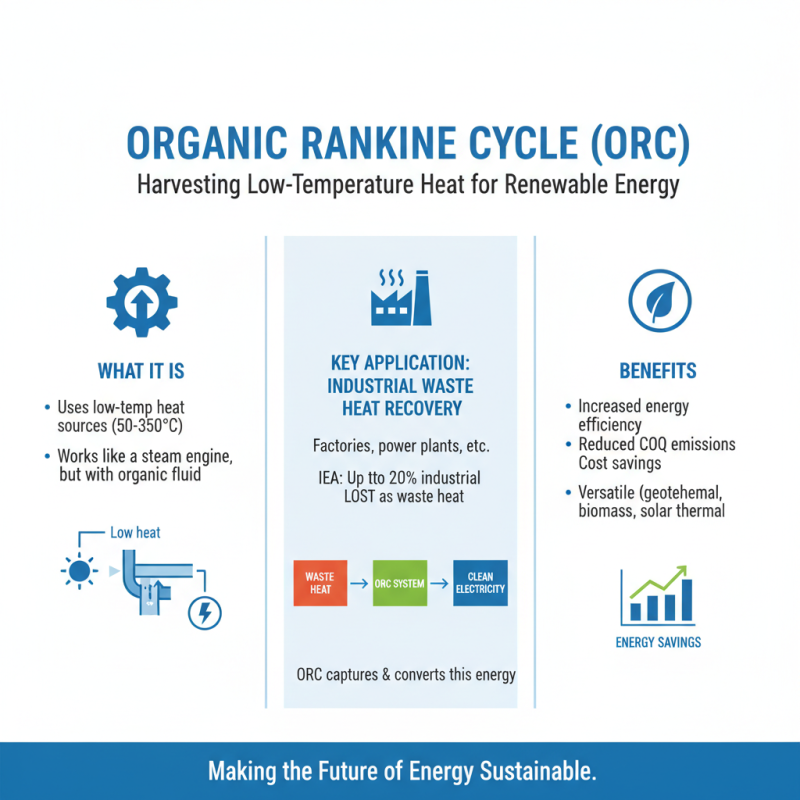
The Organic Rankine Cycle (ORC) stands out in renewable energy. It effectively uses low-temperature heat sources. This makes it ideal for various applications. Industrial waste heat recovery is one key area. A report by the International Energy Agency (IEA) notes that up to 20% of industrial energy could be lost as waste heat. ORC technology can capture and convert this energy.
ORC systems improve energy efficiency significantly. They can operate with heat sources as low as 80°C. This opens doors for utilizing geothermal and solar thermal energy. According to a study from the National Renewable Energy Laboratory, incorporating ORC can increase overall plant efficiency by 10-15%. However, ORC systems require careful design. Differences in heat source temperatures can affect performance. Balancing this design complexity is essential for optimizing efficacy.
Despite its advantages, implementing ORC systems is not without challenges. Installation costs can be high, deterring some industries. There’s also a learning curve associated with the technology. Understanding these limitations can lead to better project outcomes. The potential remains vast, driven by innovative energy solutions and ongoing research. Balancing efficiency with cost is critical for the future of renewable energy.
Reduction of Greenhouse Gas Emissions via Clean Energy Production
The Organic Rankine Cycle (ORC) offers significant benefits for clean energy production. It enhances the utilization of low-temperature waste heat. This process reduces greenhouse gas emissions effectively. By converting heat into power, ORC systems play a critical role in renewable energy transitions.
Employing ORC can lead to better efficiency in various industries. This technology can be applied in geothermal plants, biomass facilities, and even solar thermal applications. It helps capture energy that would otherwise be wasted. Consequently, this method significantly lowers carbon emissions. Ideally, integrating ORC can decrease reliance on fossil fuels.
**Tips:** Consider assessing your waste heat sources. Evaluate how much heat can be converted to energy. It’s essential to match ORC systems with your specific needs. Tailoring the technology can maximize benefits. Also, stay informed about advancements in ORC technology.
Despite its advantages, some inconsistencies exist. The efficiency of ORC can vary based on operational conditions. Regular maintenance is crucial to ensure optimal performance. Reflecting on these factors is vital for sustainable implementation and ongoing success in reducing emissions with ORC technology.
Top 5 Benefits of the Organic Rankine Cycle for Renewable Energy
This chart illustrates the key benefits of the Organic Rankine Cycle (ORC) in renewable energy production, highlighting the reduction of greenhouse gas emissions through clean energy generation.
Cost-Effectiveness in Electricity Generation from Waste Heat Recovery
The Organic Rankine Cycle (ORC) enhances electricity generation by utilizing waste heat. This process is efficient and cost-effective. ORC systems convert low-temperature heat into electrical energy. This makes them ideal for industrial applications. The recovery of waste heat significantly reduces operational costs.
Optimal integration of ORC technology can improve energy efficiency. However, implementation can be challenging. The initial investment may be higher than expected. Site-specific conditions often dictate system design and performance. This raises concerns about achieving the desired return on investment.
Despite these challenges, the financial benefits can be substantial. Reduced fuel consumption leads to lower energy bills. Additionally, industries that adopt these systems can enjoy sustainability advantages. Waste heat recovery not only saves money but also reduces emissions. Companies might face obstacles, but the long-term gains are worth considering.
Scalability and Flexibility for Diverse Renewable Energy Applications
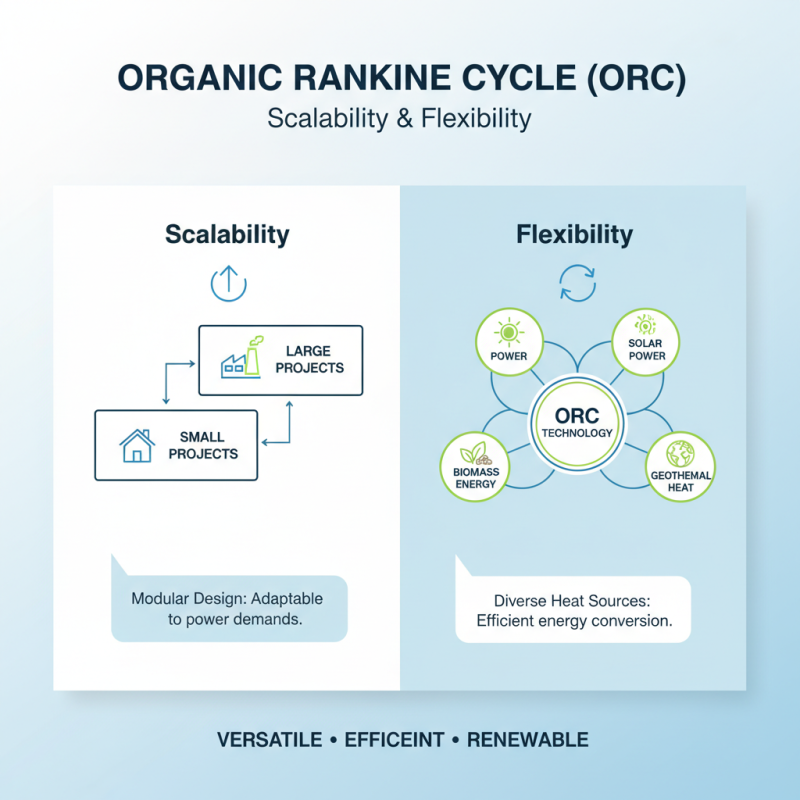
The Organic Rankine Cycle (ORC) stands out for its scalability and flexibility. It can adapt to various renewable energy sources. Whether it's solar, biomass, or geothermal energy, ORC technology fits right in. This adaptability makes it valuable for small and large projects.
One of the main benefits is its efficiency. The ORC can convert low-temperature heat into electricity. This means it can utilize waste heat from industrial processes. However, the technology may require significant upfront investment. It's essential to weigh costs against long-term gains.
Tip: Evaluate your energy sources before choosing ORC. Not all applications will yield the same efficiency. Some setups might not justify the costs.
Another aspect is its modularity. ORC systems can be expanded easily. This feature allows developers to scale projects based on demand. Yet, challenges exist in integrating these systems with existing infrastructure. It’s important to assess the compatibility of new technologies with your current setup.
Tip: Conduct thorough feasibility studies. They help identify potential roadblocks before implementation. Adjusting your project early can save time and money later on.